REAL JAPAN
日本を歩く。時代を旅する。Walk Japan. Travel its eras.
いま走っている電車。いま降っている雨。夜の海岸で、本物の間隔で光る灯台。
そして盤をひとつ回すと、同じ場所が三百年前の日本になります。Trains moving now. Rain falling now. Lighthouses flashing along the night coast at their real intervals.
Turn one dial, and the same place becomes Japan three centuries ago.
日本を知ろう!Come and know Japan.
iPhone・iPad / kutalaboiPhone and iPad / by kutalabo
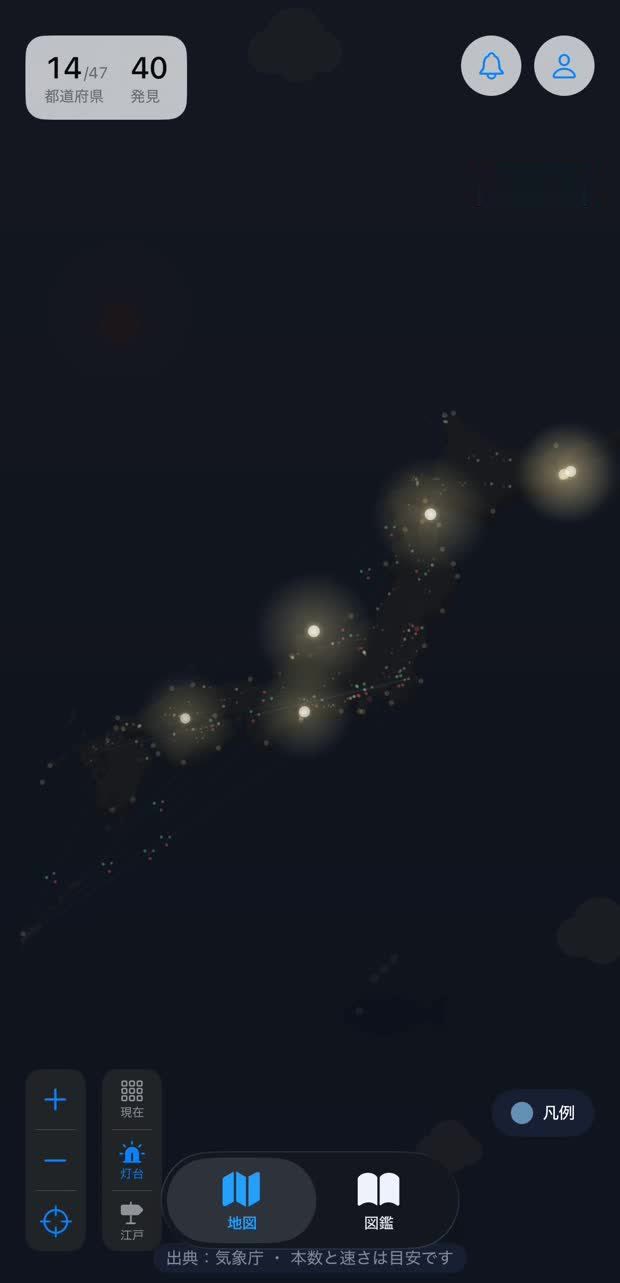
灯台モード。五十二基が、それぞれの灯質どおりに明滅します。Lighthouse mode. Fifty-two lights, each blinking to its own real characteristic.
三十秒THIRTY SECONDS
夜の海岸から、江戸まで。From a night coast to Edo.
灯台の光で始まって、夜が明け、日本を横断して東京へ。そこで盤を回すと、同じ場所が江戸になります。全部、アプリの実際の画面です。It opens on the lighthouses, the night lifts, and the map crosses the country to Tokyo. The dial turns there, and the same place becomes Edo. Every frame is the app itself.
音はありません。No sound.
ひとつめONEいまの日本JAPAN TODAY
日本じゅうの、今日が見えるToday, everywhere in Japan
主役は、そこに住んでいる人たちです。
電車も、車も、船も、飛行機も、祭りも、全部いまの日本のまま動きます。
天気も、いま実際に降っている雨とつながっています。The subject is the people who live there.
Trains, cars, ships, aircraft and festivals all move as they do in Japan right now.
The weather is tied to the rain that is actually falling.
- 電車が走ります。 乗る人の多い路線には6両、少ない路線には1両が走りますTrains run. Busy lines get six cars, quiet lines a single car
- 高速道路に車が流れます。 1日9万台の道はびっしり、2千台の道はまばらにCars flow on the expressways. A road carrying 90,000 a day is packed; one carrying 2,000 is sparse
- 空を飛行機が飛びます。 全国97の空港をつないで、航空路の上を渡っていきますAircraft cross the sky, linking 97 airports along the real air corridors
- 海を船が渡ります。 176の航路。島へ帰る人が乗っている便ですShips cross the sea. 176 routes — the sailings people take home to their islands
- いま日本で降っている雨が、そのまま地図に降ります。 気象庁の観測とつながっていますThe rain falling in Japan right now falls on the map. It is tied to Japan Meteorological Agency observations
- 台風が来ると、船が止まります。 風速13.9mで海の便が消え、24.5mで飛行機が消えますWhen a typhoon comes, the ships stop. At 13.9 m/s the sea crossings vanish; at 24.5 m/s the aircraft do
- 夜になると、日本が光になります。 深夜は電車が消え、高速の灯りだけが細く流れますAt night, Japan turns into light. After the last train the rails go dark, and only the expressway lights keep streaming
- 祭りは、開かれている日だけ地図に出ます。 逃したら、来年もう一度A festival appears on the map only on the day it is held. Miss it and you wait for next year
押せば、そこの話が出ます。 市区町村を押せば人口も産業も出ます。県を押せば、その県の鳥と花と木と獣と魚が出ます。山を押せば標高、島を押せば面積、港を押せば一年に動いた荷物の重さ。四万の場所に、それぞれの一日があります。Tap anything and it tells you about itself. Tap a municipality and its population and industries appear. Tap a prefecture and you get its bird, flower, tree, beast and fish. A mountain gives its elevation, an island its area, a port the tonnage it moved this year. Forty thousand places, each with a day of its own.
四十七47都道府県prefectures
五十二基52灯台lighthouses
千五百六十九1,569宿場post towns
四百七407藩domains
九十七97空港airports
百七十六176航路ferry routes
引いた日本から、京都のまわりまで。寄るほど、住んでいる人の側の細かさになります。From the whole country down to the streets around Kyoto. The closer you go, the more it becomes the Japan people actually live in.
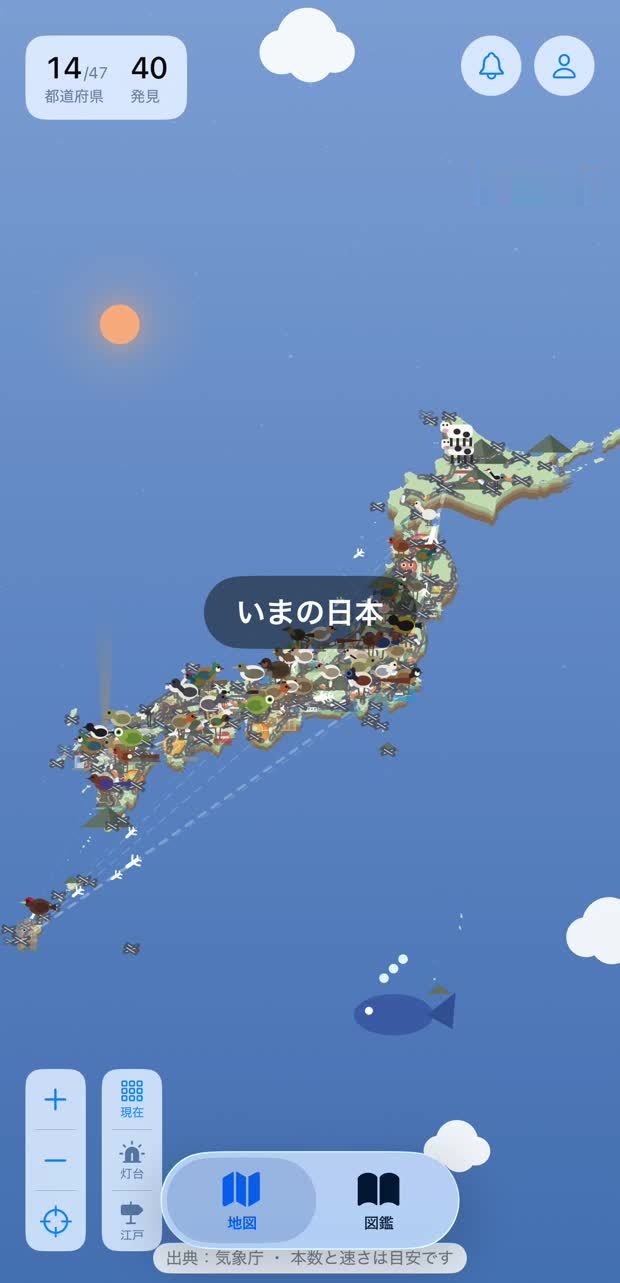
引くと、日本ぜんぶが一枚に。Pull back, and the whole country fits on one sheet.
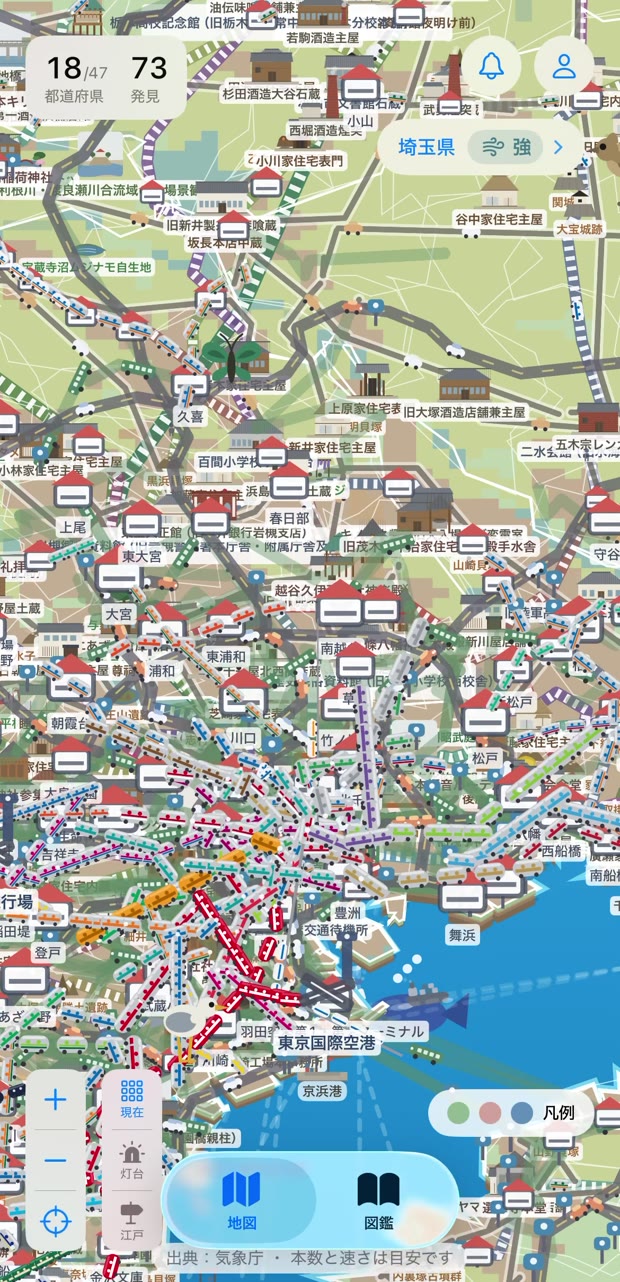
寄ると、一本ずつの線路と道路。Zoom in, and every line and road is there.
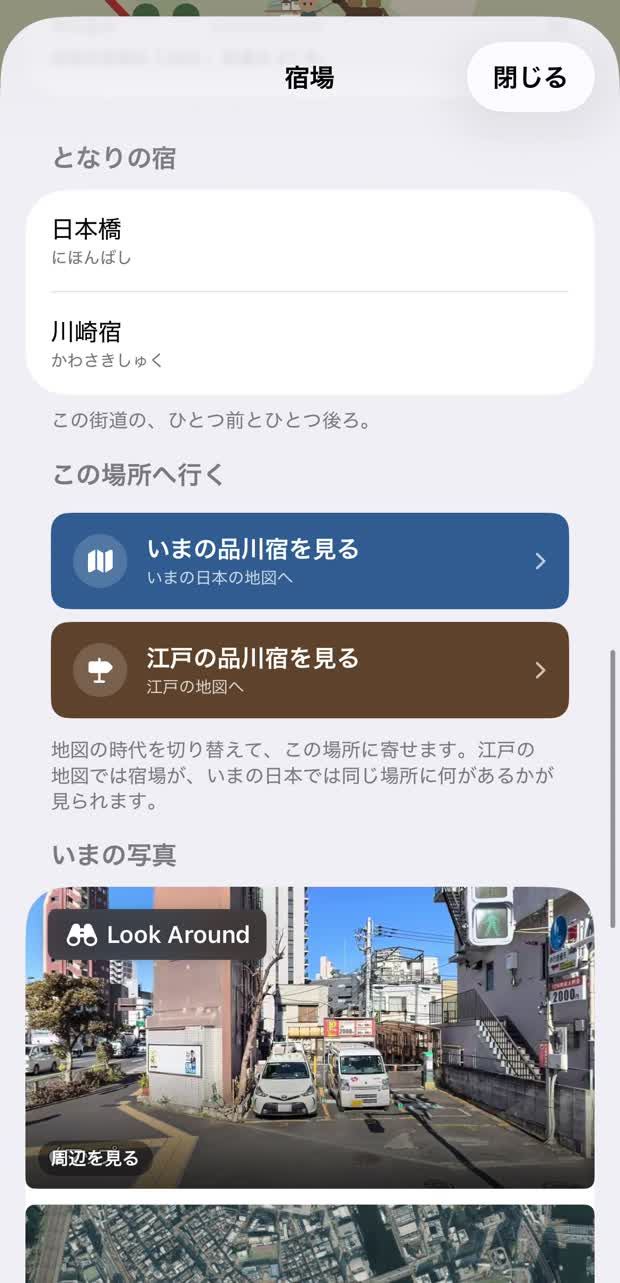
江戸の場所から、いまの同じ場所へ。From an Edo place to the same spot today.
ボタンひとつONE BUTTON
ボタンひとつで、その道の上に立てます。One button, and you are standing in that street.
地図で押した場所の札に、三つのボタンが並びます。
周辺を見る ── その道の上に立って、ぐるりと見まわした景色。
上空から ── 真上からの写真。
地図 ── まわりとの関係。Every place you tap offers three buttons.
Look around — standing in that street, turning all the way round.
From above — the aerial photograph.
Map — how it sits among its neighbours.
つまり、三百年前の宿場を押して、その場所のいまの路地に立てます。 広重が描いた品川の海は埋め立てられて、いまは京浜急行が走っています。それを、その場で見られます。 撮影されているかどうかをこちらの表で持たず、開いたその場で聞きにいきます。 無い場所には、無いと出ます。Which means you can tap a post town from three centuries ago and stand in the lane that is there today. The sea Hiroshige painted at Shinagawa was filled in; a railway runs over it now. You can see that on the spot. Whether the street has been photographed is not stored here — the app asks at the moment you open it, and says so plainly when the answer is no.
動いているものWHAT IS MOVING
走っている電車は、誰かが乗っている電車です。The train you are watching is a train somebody is riding.
数を出すのは、そこにいる人を嘘にしないためです。
混んでいる路線に六両、閑散とした路線に一両。分からない路線は一両。推測で増やしません。The numbers are there so the people in them are not made up.
Six cars on a busy line, one on a quiet one. One car where we do not know. Nothing is inflated by guessing.
- 新幹線・在来線・モノレール・路面電車・ケーブル・ロープウェイ。 区分ごとに姿が違います。多摩都市モノレールが在来線の形で走っていては、絵が実物と違いますShinkansen, conventional lines, monorails, trams, funiculars, ropeways — each class has its own shape. A monorail drawn as a commuter train would simply be wrong
- 車両の数と大きさは、その路線の乗降客数です。 よく使われる路線ほど、長く大きい電車が走りますCar count and size come from that line's passenger figures. The busier the line, the longer and larger the train
- 車体の色は、その会社の公表している塗色。 地色と帯、帯の本数までBody colours are the operator's published livery — base colour, stripe, and how many stripes
- 高速道路の形は、実在の道路そのまま。 走らせる台数は交通量センサスの数字で決めていますThe motorways are the real roads. How many cars run on them is set by the national traffic census
- 飛行機は97空港のあいだを。 飛ばす本数は、その区間を一年に何人が移動したかで決めますAircraft fly between 97 airports. How many depends on how many people actually travelled that way in a year
- 船は176の航路。 フェリーと貨客船は人を運ぶので少し大きく、貨物船とRORO船は小さく176 sea routes. Ferries and passenger-cargo ships are drawn a little larger, freighters and RORO smaller
- 高速バス停は5,324か所。 夜行が出ていく場所です5,324 express bus stops — the places the night coaches leave from
- 深夜は電車が消え、高速の灯りだけが細く流れます。 夜も働いている人がいる、ということが地図に出ますAfter midnight the trains vanish and only the motorway lights keep flowing. Somebody is still working, and the map says so
電車の色は、その会社が公表している塗色です。 地色と帯の色、帯が何本あるか。灯台を「白色 塔形 コンクリート造」という諸元から描いたのと同じやり方で、写真を写したものではありません。 形もロゴも社章も持っていません。持っているのは色だけです。Train colours come from each operator's published livery — body colour, stripe colour, how many stripes. Drawn from the specification the way the lighthouses were drawn from “white, tower-shaped, concrete”. Nothing is traced from a photograph. No shapes, no logos, no crests. Only the colours.
空THE SKY
いま降っている雨が、そのまま地図に降ります。The rain that is falling right now falls on the map.
傘のマークも、数字も出しません。 降っているところに雨が降り、地面が濡れて色が沈み、雪は積もり、雷は光り、風は雲を流します。天気だけの画面は作りません。No umbrella icons, no numbers. Where it rains, it rains; the ground darkens with wet, snow gathers, lightning flares, wind carries the cloud. There is no separate weather screen.
- 雨。 降っている地域の地面が濡れて、色が沈みますRain. The ground darkens with wet where it is falling
- 雪。 実際の積雪の深さのまま、白がたまっていきますSnow gathers to the depth actually lying there
- 雷。 鳴っている地域だけが光りますLightning flares only over the districts where it is sounding
- 風。 強い日は、雲がその向きに流れますWind. On a strong day the cloud runs with it
- 台風。 風速13.9mで海の便が消え、24.5mで飛行機が消えますTyphoons. At 13.9 m/s the sailings disappear; at 24.5 m/s the aircraft do
- 太陽と月。 朝は低く、正午に高く、夕方また低く。夜は月が同じように動きますSun and moon. Low at dawn, high at noon, low again at dusk — and the moon runs the same course by night
- 北海道が白い日に、沖縄はまだ緑のまま。 日本は広いのだと、地図の上でわかりますHokkaidō white, Okinawa still green. The map shows you how long this country is
- 朝は朝の、夕は夕の色。 時刻で地図ぜんぶの色が変わりますMorning colours in the morning, evening colours at dusk. The whole map turns with the hour
取れていないときは、何も描きません。 空のデータで「晴れ」を描いてしまうと、本当は降っているのに晴れに見えます。太陽も同じで、日本じゅうが雨の日に、くっきりした太陽は浮かびません。 雲に隠れます。そして、天気で地図が見えなくなることは絶対にありません。 天気は主役ではないからです。When the reading is missing, nothing is drawn. Painting “clear” from an empty field would show sunshine over real rain. The sun obeys the same rule: on a day when the whole country is under rain, no crisp sun hangs in the sky. It goes behind the cloud. And the weather never hides the map. The weather is not the subject here.
数えたものWHAT IS COUNTED
四万の場所に、それぞれの一日があります。Forty thousand places, each with a day of its own.
こちらで作った数字は、ひとつもありません。全部、どこかの誰かが数えて、公に出したものです。その台帳を、そのまま地図に立てています。Not one of these figures was invented here. Every one was counted by somebody and published. The ledgers are set on the map exactly as they stand.
いまの日本JAPAN TODAY
1,003山mountains国土地理院「日本の主な山岳標高」
97空港airports国土数値情報
176航路ferry routes国土数値情報
5,324高速バス停express bus stops国土数値情報
47都道府県prefectures統計でみる都道府県のすがた
2026年版の市区町村統計municipal statistics総務省統計局
232面積の分かる島islands with measured area国土地理院
100貨物量の分かる港ports with cargo figures国土交通省
58一級国道class 1 national routes国道の台帳
文化財CULTURAL PROPERTIES
303国宝の棟National Treasure structures文化庁
2,246史跡・名勝・天然記念物historic sites and scenic places文化庁
2,226社寺の建物shrine and temple buildings文化庁
4,082土木・産業・商業の遺産civil, industrial and commercial heritage文化庁
939天然記念物natural monuments文化庁
710官公庁舎と学校public halls and schools文化庁
126重要伝統的建造物群preserved townscapes文化庁
107祭りfestivals文化庁ほか
100重要無形文化財intangible cultural properties文化庁
74文化的景観cultural landscapes文化庁
江戸EDO
1,569宿場post townsCODH 江戸宿場データセット
47街道highwaysCODH
407藩domains藩の台帳
129浮世絵woodblock prints三つの帖
51北前船の港Kitamaebune ports港の記録
88遍路の札所Shikoku pilgrimage temples一周1,400キロ
33西国の札所Saikoku pilgrimage temples観音をめぐる道
29古道old roads国の史跡
98同梱した木版の画像woodblock images bundled長辺1,200px
55五十三次の解説notes on the Tōkaidō sheets一枚ずつ書き起こし
43冨嶽の解説notes on the Fuji sheets一枚ずつ書き起こし
4芝居の櫓licensed theatres寛政六年
このほかに、世界遺産、地図記号、島の名前、湖、国道の注記、県の鳥・花・木・獣・魚、港の取扱貨物量、県をまたぐ人の流れ——押せるものは全部、台帳を持っています。Beyond these: World Heritage sites, map symbols, island names, lakes, national road notes, each prefecture's bird, flower, tree, beast and fish, port cargo tonnages, the flow of people between prefectures — everything you can tap carries its own ledger.
ふたつめTWO江戸EDO
三百年前の日本を、あなたの足で歩くWalk Japan as it was three centuries ago — on your own feet
同じ地図の、同じ場所が江戸になります。
そして、あなたが東海道を歩きます。日本橋から三条大橋まで。
進むのは、あなたが実際に歩いた分だけです。The same map, the same place, in Edo.
And then you walk the Tōkaidō yourself, from Nihonbashi to Sanjō Ōhashi.
It advances only by the distance you actually walk.
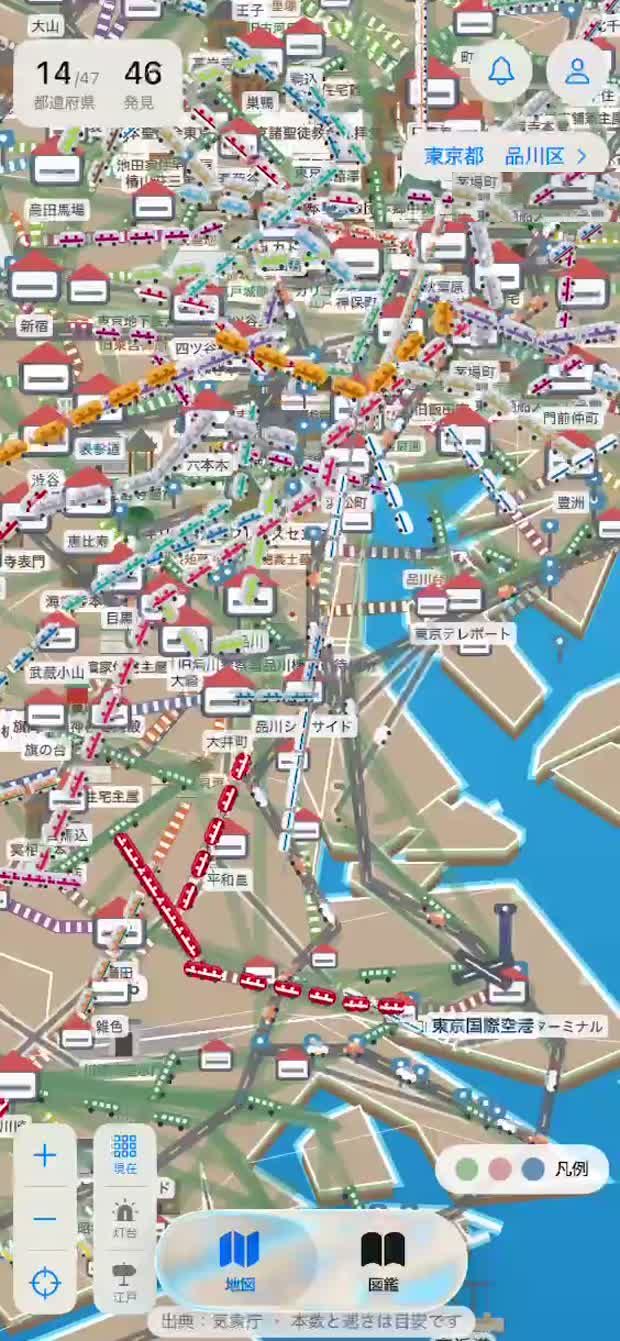
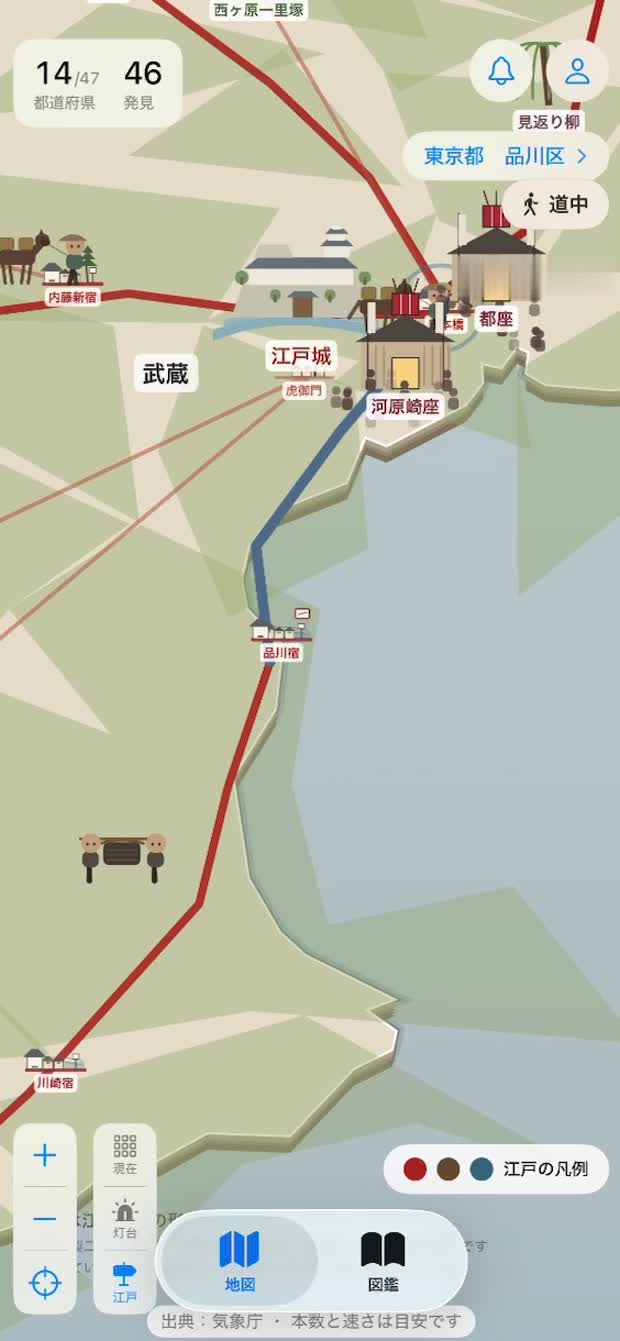
押すと切り替わります。画角は同じ、東京湾のあたり。Tap to switch. Same viewport, around Tokyo Bay.
- 宿場は1,569。 一軒ずつ違う絵です。関所のある宿、渡しのある宿、湯の宿、橋の宿1,569 post towns, each drawn differently. A town with a barrier, a town with a ferry, a hot-spring town, a bridge town
- 藩は407。 城持ちの大名には天守、陣屋の藩には塀と門と平屋。大きさは石高そのまま407 domains. A castle-holding lord gets a keep; a jinya domain gets walls, a gate and a low hall. The size follows the domain's rice yield
- 大名行列が街道を歩きます。 飛脚が宿から宿へ走り、日本海には北前船が走りますLords' processions walk the highways. Couriers run post town to post town, and the Kitamaebune sail the Japan Sea
- 一キロ歩くと、街道を二里進みます。 ふつうに歩く人で、三条大橋まで二週間ほどEvery kilometre you walk carries you two ri along the highway. At an ordinary walking pace, about two weeks to Sanjo Ohashi
- 宿に着くたび、その宿の浮世絵が帖に入りますEach time you reach a post town, its woodblock print enters your album
この旅は、歩かないと進みません。
東海道はあなたが実際に歩いた距離で進みます。一キロ歩くと街道を二里。歩かなかった日は、旅も止まります。This journey does not move unless you walk.
The Tokaido advances by the distance you actually walk - one kilometre carries you two ri along the highway. On a day you do not walk, the journey stands still.
東海道はあなたが実際に歩いた距離で進みます。一キロ歩くと街道を二里。歩かなかった日は、旅も止まります。This journey does not move unless you walk.
The Tokaido advances by the distance you actually walk - one kilometre carries you two ri along the highway. On a day you do not walk, the journey stands still.
盤を回すと、時代が入れ替わります。同じ画面、同じ場所。海岸線だけが江戸のかたちに戻ります。Turn the dial and the era changes. Same screen, same place — only the coastline goes back to the shape it had.
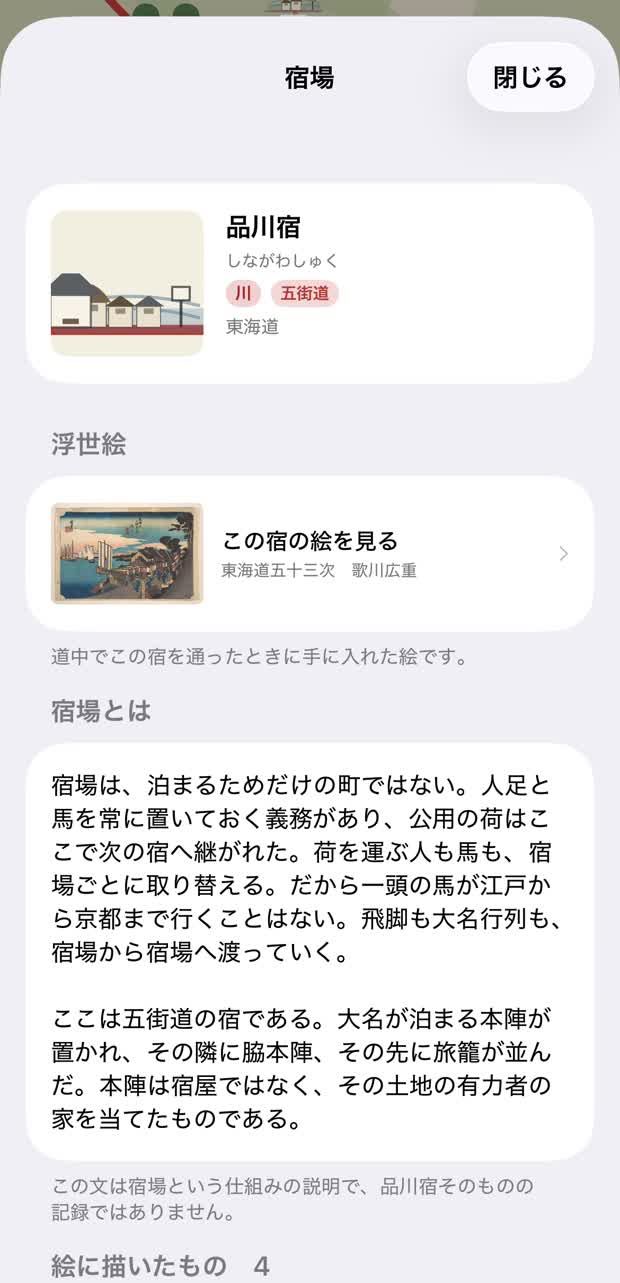
宿場ごとに、本陣・旅籠・問屋場のことが書いてあります。Each post town carries its inns, its honjin, its horse station.
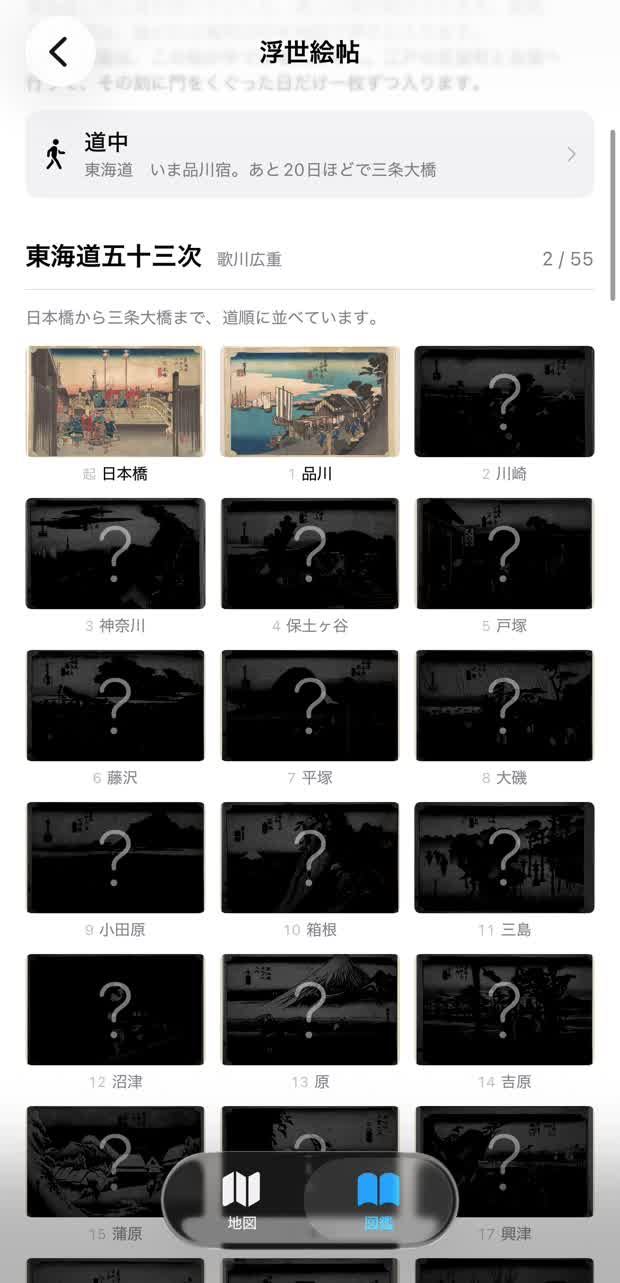
五十三次。着いた宿だけ、絵が出ます。The fifty-three stations. Only the ones you reach show their print.
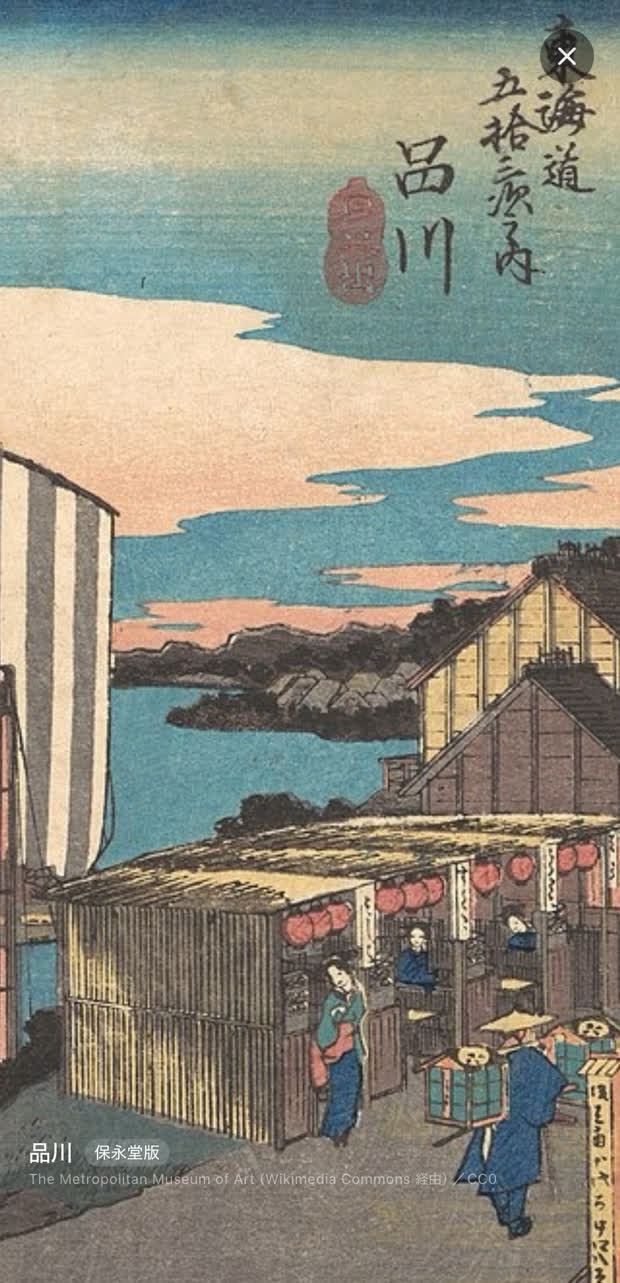
広重「東海道五十三次之内 品川」保永堂版。Hiroshige, “Shinagawa”, from the Hōeidō edition.
街道THE HIGHWAYS
道は、通り道であると同時に、職場でした。A highway was a way through — and a place where people made their living.
歩いているのは旅人だけではありません。荷を運ぶ者、人を担ぐ者、川を渡す者がいて、その差配をする役所がありました。
手ぶらで歩いていれば旅人、何かを持っていれば仕事の人です。Not everyone on the road is travelling. Some carry the freight, some carry the people, some carry them across the river — and an office existed to arrange it all.
Empty-handed is a traveller; carrying something is a job.
- 馬子。 馬を引いて荷を運ぶ人。宿場ごとに馬と人足を常に置いておく義務がありましたPackhorse men, leading the horse that carries the freight. Every post town was obliged to keep horses and porters standing by
- 駕籠かき。 棒を担いで人を運ぶ人Palanquin bearers, carrying people on a pole
- 川越人足。 大井川と安倍川で、人を担いで渡す人River porters, carrying travellers across the Ōi and the Abe on their shoulders
- 飛脚。 宿から宿へ走って継いでいきます。継飛脚は夜も走りますCouriers, running stage to stage. The official relay runs at night too
- 一里塚と関所と古道。 国の史跡になっている古道が29Milestone mounds, barriers and old roads — 29 of the old roads are designated national historic sites
- 遍路は88の札所、一周1,400キロ。西国は33の札所。 観音をめぐる道です88 temples on the Shikoku circuit, 1,400 km round. 33 on the Saikoku circuit — the Kannon pilgrimage
- 日本海には北前船。 蝦夷地の鰊と昆布が、日本海をまわって大坂まで来ました。寄港地51Kitamaebune on the Japan Sea. Herring and kelp from Ezo came the long way round to Osaka. 51 ports of call
- 江戸の海には菱垣廻船と樽廻船。 垣立にひし形の格子を組むのが菱垣、酒樽を積むのが樽廻船Higaki and taru freighters on the Edo run — one named for the diamond lattice on its rail, the other for the sake casks on its deck
大名行列は、道の途中で消えません。 参勤交代は片道ではないからです。参勤で江戸へ出て、交代で国へ帰る。だから街道の上には、江戸へ向かう列と、国へ帰る列の両方がいます。先頭は毛槍を持った奴、次に挟箱、槍、侍、殿様の乗物、そして後備え。一度出た列は、日本橋まで行きます。A daimyō procession never fades out halfway. Sankin-kōtai was not a one-way trip: out to Edo, then home again, year after year. So both directions are on the road at once. At the head the spear-bearer, then the box, the lances, the samurai, the lord's palanquin, and the rear guard. A column that sets out reaches Nihonbashi.
大井川と安倍川には、橋も渡し舟もありませんでした。 人が人を担いで渡ります。東海道でこれが要るのは、この二か所だけです。川が増水すれば、旅は止まります。The Ōi and the Abe had neither bridge nor ferry. Men carried people across on their shoulders. On the whole Tōkaidō only these two crossings needed it. When the river rose, the journey stopped.
門をくぐるTHROUGH THE GATE
行って、その時刻に、門をくぐらないと手に入りません。You have to be there, at the right hour, and walk through the gate.
地図に載っているもの——宿場、藩、港、山、祭り——は、見つければ図鑑に入ります。
江戸の浮世絵だけは違います。
昼は芝居町の木戸を。都座・桐座・河原崎座、寛政六年の控櫓です。写楽が一枚ひらきます。
夜は吉原の大門を。暮六つに提灯へ火が入ります。歌麿が一枚ひらきます。Everything on the map — post towns, domains, ports, mountains, festivals — enters the book the moment you find it.
The Edo prints are the exception.
By day, the theatre gate. Miyako-za, Kiri-za, Kawarazaki-za — the licensed houses of 1794. A Sharaku opens.
By night, the great gate of Yoshiwara, where the lanterns are lit at dusk. An Utamaro opens.
それぞれ一日一枚。合わせて一日二枚まで。二枚目は翌日です。 そして時刻が合っていないとひらきません。 芝居は上演中だけ、吉原は夜見世だけ。逃したら、明日もう一度行くことになります。One from each, per day — two a day at most, and the next one waits for tomorrow. And the hour has to be right. The theatre only while the play is on, Yoshiwara only after dark. Miss it, and you go back tomorrow.
吉原について。 描いているのは場所の形だけです。大門、見返り柳、鳥居、社。人の姿は遠くの点までにして、誰が誰とは描いていません。 ここが何であったかは、札のいちばん上に事実として書いてあります。美化もしませんし、惨さも語りません。On Yoshiwara. Only the shape of the place is drawn — the gate, the looking-back willow, the torii, the shrine. People appear as distant figures and no one is identified. What the place was is stated plainly at the top of its card, before anything else. It is neither prettified nor dramatised.
浮世絵帖。集めた絵が道順に並びます。日本橋から三条大橋まで、埋まるほど街道がつながっていきます。The print album. The sheets line up in road order — from Nihonbashi to Sanjō Ōhashi, the highway joining up as it fills.
絵は大きく見られます。 指で広げれば、遠くの富士も、橋を渡る行列の一人ひとりも見えます。まだ手に入っていない絵も、名前だけは並んでいます。 何が残っているかが見えないと、集める気になりません。The prints open large. Spread them with two fingers and the far Fuji, and every single figure crossing the bridge, are there. Sheets you do not have yet still show their titles. You cannot want to collect what you cannot see is missing.
古地図THE OLD MAP
江戸の人が描いた日本地図を、そのまま。The map of Japan as Japanese people drew it, left exactly as it is.
この層が出ているあいだ、いまの日本は画面にいません。 海岸線も、電車も、天気も、全部下に隠れます。混ぜません。
出すのは二つだけ。木版の地図そのものと、その時代の名所です。While this layer is up, present-day Japan is not on screen. Coastline, trains, weather — all of it goes under. Nothing is mixed.
Two things only: the woodblock map itself, and the famous places of that era.
いまの地名も、いまの指定も出しません。 時代の混ざったものをこの層に一つも載せない、という決めごとです。これは測った線ではないので、どうやって引かれている地図なのかは、必ず書いてあります。 そこを隠すと嘘になります。No modern place names, no modern designations. Nothing from another century is allowed onto this layer. These lines were never surveyed, so how the map was drawn is always stated. To hide that would be a lie.
絵のことON THE DRAWINGS
同じ絵は、同じ説明を持つものにしか出ません。Two things share a drawing only if they share a description.
型を何種類か作って貼り分けているのではありません。台帳の解説文を、そのまま形にしています。There is no set of templates being stamped around. The register's own description is what becomes the shape.
- 社寺の建物2,226棟。 屋根の形×葺いたもの×造り×23の細部×桁行の寸法。5.5メートルの手水舎と37メートルの本堂は、同じ幅では並びません2,226 shrine and temple buildings. Roof form × roofing material × construction × 23 details × the recorded span. A 5.5-metre water pavilion and a 37-metre hall cannot stand at the same width
- 天然記念物は、名前が種を言っています。 「阿寒湖のマリモ」「歌才ブナ自生北限地帯」。読めば何がいるか分かるので、1件ずつ違う姿になり、その生きものらしく動きますA natural monument's name states its species — the marimo of Lake Akan, the northern limit of the beech. So each one is drawn differently, and moves the way that creature moves
- 宿場の絵は30種類。 関所のある宿、渡しのある宿、湯の宿、橋の宿。どの宿場にも高札場と街道の土があります30 kinds of post town — with a barrier, with a ferry, with a hot spring, with a bridge. Every one has its notice board and its highway dirt
- 藩庁は城208・陣屋169・館ほか30。 台帳に入っている藩庁の名前そのもので決まります。「福山城跡」なら城、「大溝陣屋」なら陣屋208 castles, 169 jinya, 30 halls. Decided by the name in the register itself: “Fukuyama Castle ruins” gets a castle, “Ōmizo jinya” gets a jinya
- 町並みは27種類。 商家町26・山村集落16・武家町14・港町13・宿場町10……暖簾の下がる町と、長屋門の続く町と、坑口のある町は、実際にまるで違います27 kinds of townscape — 26 merchant towns, 16 mountain villages, 14 samurai quarters, 13 ports, 10 post towns. A street of shop curtains, a street of long gatehouses and a street with a mine mouth are nothing alike
- 灯台の塔も諸元のとおり。 「白地に黒横帯3本塗」なら、白い塔に黒い帯を三本The towers follow their specifications too. “White with three black horizontal bands” gets a white tower with three black bands
分からないことは、分からないと書きます。 石高の分からない藩はいちばん小さい姿になりますが、それは「小さい藩」という意味ではなく、数字が無いというだけです。札にもそう書いてあります。北前船の大きさが全部同じなのも、どの港にどれだけ着いたかの数字を持っていないからです。持っていない数字に、意味を持たせません。What is unknown is written as unknown. A domain with no recorded stipend is drawn at the smallest size — which does not mean it was small, only that the figure is missing. The card says so. All the Kitamaebune ships are the same size for the same reason: no one recorded how many called where. A figure we do not have is never given meaning.
道中THE JOURNEY
三日ぶりに開けば、三日分まとめて出ます。Open it after three days and three days come out at once.
地図のいちばん上に、伸びる帯が出ます。 旅をしているあいだだけ。
押せば地図が自分に寄ります。街道の上に、自分が立っています。 藍色の輪がゆっくり脈打って、止まっているときは脈打ちません。A bar grows across the top of the map — only while a journey is under way.
Tap it and the map comes to you. You are standing on the highway. An indigo ring pulses slowly around you, and stops pulsing when you stop.
- 一キロ歩くと、街道を二里進みます。 ふつうに歩く人で、三条大橋まで二週間ほどEvery kilometre you walk carries you two ri along the highway. At an ordinary walking pace, about two weeks to Sanjo Ohashi
- 歩かなかった日は、旅も止まります。 日が経てば進む作りは、やめましたOn a day you do not walk, the journey does not move. Advancing simply because time passed was taken out
- 知らせが届きます。 端末の中だけで動きます。サーバも通信も要りませんWord reaches you. It all happens on the device — no server, no connection
- 押したものは全部、図鑑に残ります。 駅も、空港も、山も、川も、灯台も、国道の番号も、市区町村もEverything you tap stays in the book — stations, airports, mountains, rivers, lighthouses, road numbers, municipalities
- 残すのは名前と場所と、はじめて押した日だけ。 強さも珍しさも付けませんOnly the name, the place and the day you first tapped it. No rarity, no power rating
- 図鑑の頁は39種類。 全部で押せるものの数です39 sections — which is everything the map lets you tap
みっつめTHREE灯台LIGHTHOUSES
夜の海岸が、本物の間隔で光るThe night coast flashes at its true intervals
灯台は、光で名乗っています。
船はその間隔と色で、いまどの灯台を見ているかを知ります。A lighthouse announces itself by its light.
A ship reads the interval and the colour to know which one it is looking at.
- 52基が、国の定めた灯質そのままの間隔で光ります。 「毎15秒に1閃光」「毎20秒に白2閃赤1閃」52 lighthouses flash at the character set for each of them. One flash every 15 seconds; two white and one red every 20
- 光の輪の大きさは、その灯台が届く距離です。 8海里と28海里では3倍以上ちがいますThe ring of light is as wide as that lighthouse reaches. 8 nautical miles against 28 is more than three times
- 芯の明るさは、その灯台の光の強さです。 640カンデラと160万カンデラで2500倍The brightness at the centre is that lighthouse's intensity. 640 candela against 1,600,000 is 2,500 times
- いちばん高いのは出雲日御碕灯台の43.65m。 高さの比もそのまま描いていますThe tallest is Izumo Hinomisaki at 43.65 m. The heights keep their true ratio
- 第1等レンズは、日本に5基だけ。 室戸岬・角島・犬吠埼・出雲日御碕・経ヶ岬Only five first-order lenses remain in Japan: Muroto, Tsunoshima, Inubosaki, Izumo Hinomisaki and Kyogamisaki
昼の地図では小さすぎて分からない違いが、暗くすると見えてきます。 日本の海岸線ぜんぶが、てんでばらばらの間隔で光りはじめます。合っていないのが、正しいのです。Differences too small to see by day appear once the map goes dark. The whole coastline begins to flash, every light out of step with the next. Being out of step is what is correct.
灯台モード。画面を暗くすると、日本の海岸線ぜんぶが、てんでばらばらの間隔で光りはじめます。Lighthouse mode. Take the screen down to dark and the whole coastline begins to flash, every light out of step with the next.
出せるのは52基だけです。 地理院の地図記号は全国に470ありますが、記号に名前が入っていません。名前も灯質も分からないものは光らせません。残りが無いのではなく、こちらが知らないだけです。 そう書いてあります。そして——灯台は、誰かのために光っています。 いまこの瞬間も、その光を見ながら帰ってくる船があります。Only 52 can be shown. The national map carries 470 lighthouse symbols, but the symbols hold no names. What has no name and no characteristic is not lit. The rest are not absent — we simply do not know them, and the app says so. And — a lighthouse shines for somebody. At this very moment there is a boat coming home by one of them.
残っているものWHAT REMAINS
国宝も、村の酒蔵の煙突も、同じ地図に建っています。A National Treasure and a village brewery chimney stand on the same map.
国宝303棟。史跡・名勝・天然記念物2,246件。社寺の建物2,226件。
土木・産業・商業の遺産4,082件。 江戸と明治の家、昭和の役場と学校、山の隧道、町の酒蔵の煙突まで。303 National Treasure structures. 2,246 historic sites, scenic places and natural monuments. 2,226 shrine and temple buildings.
4,082 pieces of civil, industrial and commercial heritage — Edo and Meiji houses, Shōwa town halls and schools, mountain tunnels, the chimney of a country sake brewery.
絵は一件ずつ違います。 台帳の解説文に「入母屋造」「本瓦葺」と書いてあれば、その屋根で描きます。同じ形のものは二つとありません。Every one is drawn differently. Where the register says hip-and-gable roof, or true tiles, that is the roof it gets. No two are the same shape.
重要無形文化財は100件。 焼き物も織りも、人が持っている技です。台帳に所在地がないので、その技が伝わっている土地に置いてあります。文化的景観74件、重要伝統的建造物群126件。 人が土地を使ってきたかたちが、そのまま選ばれたものです。100 intangible cultural properties — pottery, weaving, skills held by people. The register carries no coordinates, so each sits on the ground where the skill is kept. 74 cultural landscapes and 126 preserved townscapes — chosen for the shape that living on that land has left.
そしてAND図鑑THE BOOK
押したものは、全部 図鑑に残りますEverything you tap stays in your book
名前と場所と、はじめて押した日。
半年後に見返すと、自分がどこを見てきたかの記録になっています。The name, the place, and the day you first tapped it.
Six months on, it has become a record of where you have been looking.
図鑑の頁は39種類。全部で押せるものの数です。The book has 39 sections — everything the map lets you tap.
出どころWHERE IT COMES FROM
全部、どこかの誰かが数えたものです。Every figure was counted by someone, somewhere.
このアプリに、こちらで作った数字はひとつもありません。出どころはアプリの中にも一件ずつ書いてあります。Not one figure in this app was made up. Every source is named inside the app as well, one by one.
陸の形・行政区域・道路・鉄道Coastlines, boundaries, roads, railways国土交通省 国土数値情報
天気の実況Live weather気象庁
江戸の宿場Edo post townsCODH 江戸宿場データセット
浮世絵Woodblock printsThe Metropolitan Museum of Art, Open Access / Wikimedia Commons
いまの写真・上空写真Street-level and aerial photographyApple マップ
浮世絵はパブリックドメインの所蔵品を使っています。館ごとに条件が違うので、一枚ずつ確かめて、非商用条件のものは入れていません。The prints are public-domain holdings. Terms differ by museum, so each image was checked one by one, and anything restricted to non-commercial use was left out.
関所THE BARRIER
日本橋から四十キロは、ずっと無料。Forty kilometres from Nihonbashi, free forever.
江戸の旅人の一日ぶん。その内側は、現在も江戸も、全部そのままご覧いただけます。東海道なら戸塚の先まで歩けます。One day's walk for an Edo traveller. Inside that circle everything is open, in both eras. On the Tōkaidō you can walk past Totsuka before you meet the barrier.
無料Free日本橋から四十キロの内側。現在と江戸を行き来できます。Everything inside forty kilometres of Nihonbashi, in both eras.
手形The pass日本ぜんぶ。五十二基の灯台、五十三次の旅、浮世絵帖。All of Japan. The fifty-two lighthouses, the full Tōkaidō, the print album.
¥1,000買い切り。月々の支払いはありません。One-time purchase. No subscription.
※ 英語でご覧いただけますが、藩名・宿場名・祭りの名前・文化財の名前は日本語のままです。長い解説文も日本語のものがあります。iPhone の翻訳でその場で読めます。Note: the interface is in English, but the names of domains, post towns, festivals and cultural properties stay in Japanese, and some longer notes are Japanese too. Your iPhone's built-in translation reads them where they stand. The screens pictured here are running in Japanese; English captures are being made now.